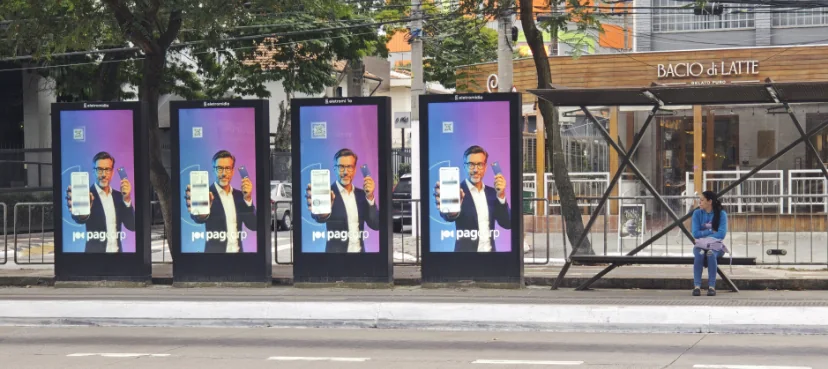
Der Begriff LED-Display kann ein LCD-Panel mit LED-Hintergrundbeleuchtung oder eine Direct-View-LED-Wand meinen, deren LEDs das Bild bilden. Angebote sind nur bei klarer Bildstruktur vergleichbar.
Mit der Bildstruktur beginnen
LCD verwendet eine Flüssigkristallschicht und Hintergrundbeleuchtung. Direct-View-LED verwendet LEDs als Pixel und wird meist aus Cabinets oder Modulen zusammengesetzt. Auflösung, Fugen, Helligkeit, Wärme, Wartung und Budget unterscheiden sich daher.
Wann LCD meist die stärkere Lösung ist
LCD ist oft praktisch bei kurzem bis mittlerem Betrachtungsabstand, festem Seitenverhältnis, informationsreichem Inhalt, Schaufenstern und Projekten mit fertiger Einheit. Vergleichen Sie Helligkeit des Endprodukts, Glas, Thermik und Steuerungsschnittstellen.
Wann Direct-View-LED meist die stärkere Lösung ist
Direct-View-LED wird oft gewählt, wenn die aktive Fläche über Standardpanelgrößen wachsen muss, das Publikum weiter entfernt ist oder eine sehr große Fläche nötig ist. Prüfen Sie Pixelabstand, Sichtdistanz, Planheit, Redundanz, Wartungszugang und Inhalte.
Vor einer Preisanfrage vergleichen
| Decision point | LCD / LED-backlit LCD | Direct-view LED |
|---|---|---|
| Image structure | Liquid-crystal image layer with LED backlight | Individual LED emitters form the image |
| Resolution and size | Fixed native resolution per panel; scale with a tiled LCD design only where appropriate | Set by pixel pitch and total active pixels; scales through cabinet layout |
| Viewing and content | Often suited to close or moderate viewing and detailed information | Often suited to large-format viewing when pixel pitch matches audience distance |
| Service model | Assess panel, backlight, thermal system, glass and electronics at finished-unit level | Assess module, cabinet, power, data, redundancy, calibration and physical access |
| Energy evidence | Request finished-unit power, brightness mode and test conditions | Request cabinet power data, brightness mode, configuration and test conditions |
Quellen und Messhinweise
Die folgenden unabhängigen Normen und Programme dienen als Quelle für Begriffe und Prüfmethoden. Sie ersetzen weder eine Projektspezifikation noch den Testbericht des fertigen Produkts.
For example, VESA's public DisplayHDR system uses defined peak-luminance tiers such as 400 and 1000 for its own performance categories. Those labels are useful for discussing test conditions, but they are not a universal outdoor-display requirement. Compare a supplier's complete-unit measurement method, operating mode and stated conditions.
- VESA DisplayHDR - public display-performance criteria and luminance-tier terminology.
- U.S. EPA ENERGY STAR Displays Program - program information and measured energy-performance context.
- AVIXA Standards - professional audiovisual standards and system-planning context.
- IEC Webstore - source for the IEC 62087 power-consumption measurement-method standard.
Fragen für einen brauchbaren Vergleich
- Is the proposed product an LCD with LED backlight, or a direct-view LED display?
- What is the actual viewing distance, smallest required text and content type?
- Is brightness quoted for the complete display in the stated operating mode?
- Which components can be serviced on site, from which side, and with what spares?
- What power figure, heat assumption and measurement method support the quotation?
- What finished-unit sample or acceptance evidence can be supplied before volume production?