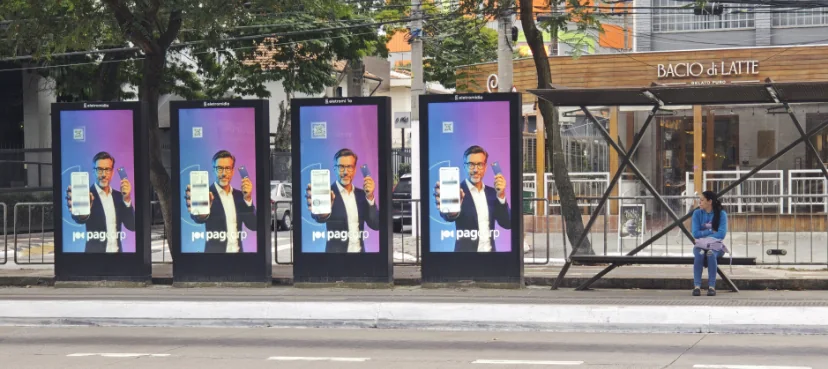
La expresión 'pantalla LED' puede significar un panel LCD con retroiluminación LED o una pared LED de visión directa cuyos LED forman la imagen. Las cotizaciones solo son comparables cuando la estructura de imagen es clara.
Empiece por la estructura de imagen
LCD utiliza una capa de cristal líquido y retroiluminación. LED de visión directa utiliza LED como píxeles, normalmente montados en gabinetes o módulos. Por eso cambian resolución, juntas, brillo, calor, mantenimiento y presupuesto.
Cuándo LCD suele ser la ruta más sólida
LCD suele ser práctico para visualización cercana o media, relación fija, contenido informativo, escaparates y proyectos que necesitan una unidad terminada. Compare brillo de la unidad final, vidrio, diseño térmico e interfaces de control.
Cuándo LED de visión directa suele ser la ruta más sólida
LED de visión directa se considera cuando el área activa debe crecer más allá de paneles estándar, el público está más lejos o se necesita un lienzo muy grande. Verifique pixel pitch, distancia, planitud, redundancia, acceso de servicio y contenido.
Qué comparar antes de pedir precio
| Decision point | LCD / LED-backlit LCD | Direct-view LED |
|---|---|---|
| Image structure | Liquid-crystal image layer with LED backlight | Individual LED emitters form the image |
| Resolution and size | Fixed native resolution per panel; scale with a tiled LCD design only where appropriate | Set by pixel pitch and total active pixels; scales through cabinet layout |
| Viewing and content | Often suited to close or moderate viewing and detailed information | Often suited to large-format viewing when pixel pitch matches audience distance |
| Service model | Assess panel, backlight, thermal system, glass and electronics at finished-unit level | Assess module, cabinet, power, data, redundancy, calibration and physical access |
| Energy evidence | Request finished-unit power, brightness mode and test conditions | Request cabinet power data, brightness mode, configuration and test conditions |
Fuentes y notas de medición
Las siguientes normas y programas independientes se citan para terminología y métodos de verificación. No sustituyen una especificación de proyecto ni el informe de prueba del producto terminado.
For example, VESA's public DisplayHDR system uses defined peak-luminance tiers such as 400 and 1000 for its own performance categories. Those labels are useful for discussing test conditions, but they are not a universal outdoor-display requirement. Compare a supplier's complete-unit measurement method, operating mode and stated conditions.
- VESA DisplayHDR - public display-performance criteria and luminance-tier terminology.
- U.S. EPA ENERGY STAR Displays Program - program information and measured energy-performance context.
- AVIXA Standards - professional audiovisual standards and system-planning context.
- IEC Webstore - source for the IEC 62087 power-consumption measurement-method standard.
Preguntas que hacen útil la comparación
- Is the proposed product an LCD with LED backlight, or a direct-view LED display?
- What is the actual viewing distance, smallest required text and content type?
- Is brightness quoted for the complete display in the stated operating mode?
- Which components can be serviced on site, from which side, and with what spares?
- What power figure, heat assumption and measurement method support the quotation?
- What finished-unit sample or acceptance evidence can be supplied before volume production?