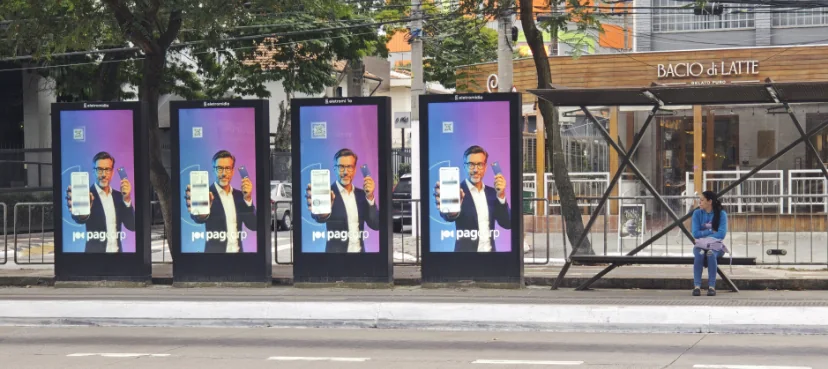
Met 'LED-display' worden vaak twee verschillende zaken bedoeld: een lcd-paneel met led-achtergrondverlichting, of een direct-view LED-wand waarvan de leds zelf het beeld vormen. Offertes zijn pas vergelijkbaar als de beeldstructuur duidelijk is.
Begin met de beeldstructuur
LCD gebruikt een vloeibare-kristallaag en achtergrondverlichting. Direct-view LED gebruikt leds als pixels, meestal opgebouwd uit cabinets of modules. Daardoor verschillen resolutie, naden, helderheid, warmte, onderhoud en budget.
Wanneer LCD meestal de sterkere route is
LCD is vaak praktisch voor korte tot gemiddelde kijkafstand, vaste beeldverhouding, informatierijke content, etalages en projecten met een complete unit. Vergelijk de helderheid van het eindproduct, glas, thermisch ontwerp en besturingsinterfaces.
Wanneer direct-view LED meestal de sterkere route is
Direct-view LED wordt vaak overwogen wanneer het actieve oppervlak groter moet zijn dan standaardpanelen, het publiek verder weg staat of een zeer groot canvas nodig is. Controleer pixel pitch, kijkafstand, vlakheid, redundantie, service en content.
Wat vergelijken voordat u een prijs vraagt
| Decision point | LCD / LED-backlit LCD | Direct-view LED |
|---|---|---|
| Image structure | Liquid-crystal image layer with LED backlight | Individual LED emitters form the image |
| Resolution and size | Fixed native resolution per panel; scale with a tiled LCD design only where appropriate | Set by pixel pitch and total active pixels; scales through cabinet layout |
| Viewing and content | Often suited to close or moderate viewing and detailed information | Often suited to large-format viewing when pixel pitch matches audience distance |
| Service model | Assess panel, backlight, thermal system, glass and electronics at finished-unit level | Assess module, cabinet, power, data, redundancy, calibration and physical access |
| Energy evidence | Request finished-unit power, brightness mode and test conditions | Request cabinet power data, brightness mode, configuration and test conditions |
Bronnen en meetnotities
De volgende onafhankelijke normen en programma's worden gebruikt voor terminologie en verificatiemethoden. Zij vervangen geen projectspecificatie of testrapport van het eindproduct.
For example, VESA's public DisplayHDR system uses defined peak-luminance tiers such as 400 and 1000 for its own performance categories. Those labels are useful for discussing test conditions, but they are not a universal outdoor-display requirement. Compare a supplier's complete-unit measurement method, operating mode and stated conditions.
- VESA DisplayHDR - public display-performance criteria and luminance-tier terminology.
- U.S. EPA ENERGY STAR Displays Program - program information and measured energy-performance context.
- AVIXA Standards - professional audiovisual standards and system-planning context.
- IEC Webstore - source for the IEC 62087 power-consumption measurement-method standard.
Vragen die de vergelijking bruikbaar maken
- Is the proposed product an LCD with LED backlight, or a direct-view LED display?
- What is the actual viewing distance, smallest required text and content type?
- Is brightness quoted for the complete display in the stated operating mode?
- Which components can be serviced on site, from which side, and with what spares?
- What power figure, heat assumption and measurement method support the quotation?
- What finished-unit sample or acceptance evidence can be supplied before volume production?