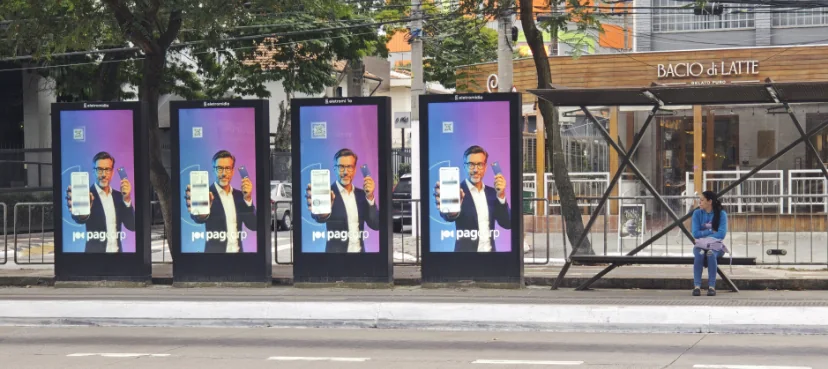

The phrase “LED display” is often used for two different things: an LCD panel with an LED backlight, or a direct-view LED wall whose individual LEDs form the image. A quotation is only comparable when the image structure is clear.
Start with the image structure
LCD uses a liquid-crystal image layer and a backlight. Direct-view LED uses LED emitters as the pixels themselves, normally assembled from cabinets or modules. Both can be commercial-grade products, but they create different boundaries for resolution, seams, brightness, heat, maintenance and budget.
When LCD is usually the stronger route
LCD is often a practical route for close or moderate viewing distances, fixed aspect ratios, information-heavy content, storefront screens and projects that need a finished unit. Compare the finished-unit brightness, glass treatment, thermal design and player or control interfaces rather than the bare panel alone.
When direct-view LED is usually the stronger route
Direct-view LED is often considered where the active area must scale beyond standard panel sizes, the audience is farther away, or the site needs a very large-format canvas. The decision still depends on pixel pitch, viewing distance, cabinet flatness, redundancy, front or rear service access and the expected content.
What to compare before asking for a price
| Decision point | LCD / LED-backlit LCD | Direct-view LED |
|---|---|---|
| Image structure | Liquid-crystal image layer with LED backlight | Individual LED emitters form the image |
| Resolution and size | Fixed native resolution per panel; scale with a tiled LCD design only where appropriate | Set by pixel pitch and total active pixels; scales through cabinet layout |
| Viewing and content | Often suited to close or moderate viewing and detailed information | Often suited to large-format viewing when pixel pitch matches audience distance |
| Service model | Assess panel, backlight, thermal system, glass and electronics at finished-unit level | Assess module, cabinet, power, data, redundancy, calibration and physical access |
| Energy evidence | Request finished-unit power, brightness mode and test conditions | Request cabinet power data, brightness mode, configuration and test conditions |
Sources and measurement notes
The following independent standards and programs are cited for terminology and verification methods. They do not replace a project-specific specification or the finished-product test report.
For example, VESA's public DisplayHDR system uses defined peak-luminance tiers such as 400 and 1000 for its own performance categories. Those labels are useful for discussing test conditions, but they are not a universal outdoor-display requirement. Compare a supplier's complete-unit measurement method, operating mode and stated conditions.
- VESA DisplayHDR - public display-performance criteria and luminance-tier terminology.
- U.S. EPA ENERGY STAR Displays Program - program information and measured energy-performance context.
- AVIXA Standards - professional audiovisual standards and system-planning context.
- IEC Webstore - source for the IEC 62087 power-consumption measurement-method standard.
Questions that make the comparison useful
- Is the proposed product an LCD with LED backlight, or a direct-view LED display?
- What is the actual viewing distance, smallest required text and content type?
- Is brightness quoted for the complete display in the stated operating mode?
- Which components can be serviced on site, from which side, and with what spares?
- What power figure, heat assumption and measurement method support the quotation?
- What finished-unit sample or acceptance evidence can be supplied before volume production?